
How centimeter-level auto-steering is driving the future of agricultural machinery
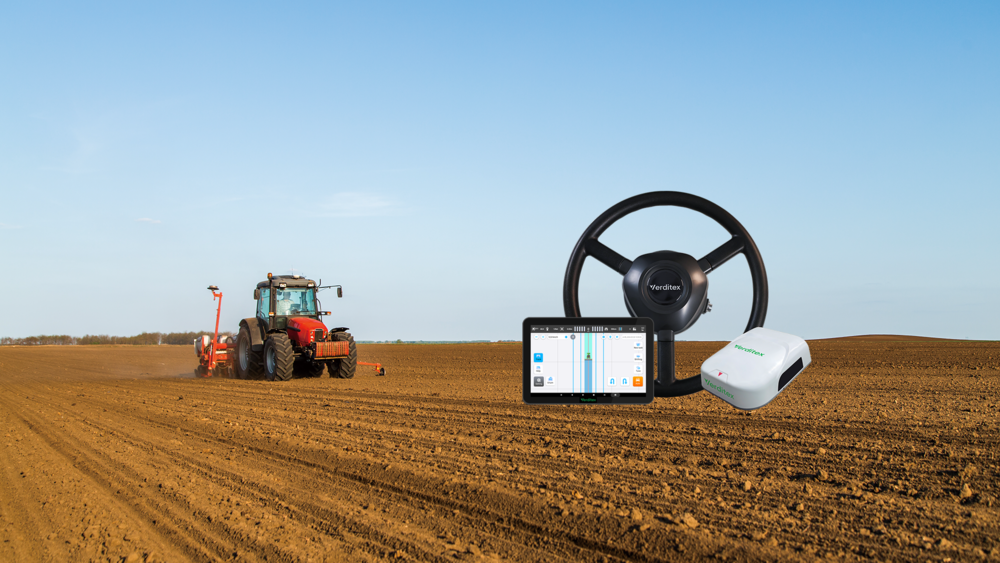
Smart agriculture is driving what many call the “Second Industrial Revolution” in farming, transforming mechanization into full-scale intelligence. At the heart of this shift is the GNSS auto-steering system, a satellite-guided technology that steers tractors and equipment with centimeter-level accuracy, ensuring straight rows and reduced overlap.
To achieve stable, centimeter-level precision in the field, four components need to work in perfect harmony: GNSS/INS navigation, PnC algorithms (planning and control algorithms), a steering motor, and a display termina. These four components serve as the system’s “eyes, brain, body, and face,” each facing unique challenges in complex environments, among them: signal blockages, multi-sensor fusion, high-torque precision control, and seamless human-machine interaction.
This blog breaks down the technology behind each core component and reveals how Quectel, through its Verditex brand, is turning auto-steering farming from concept into large-scale reality.
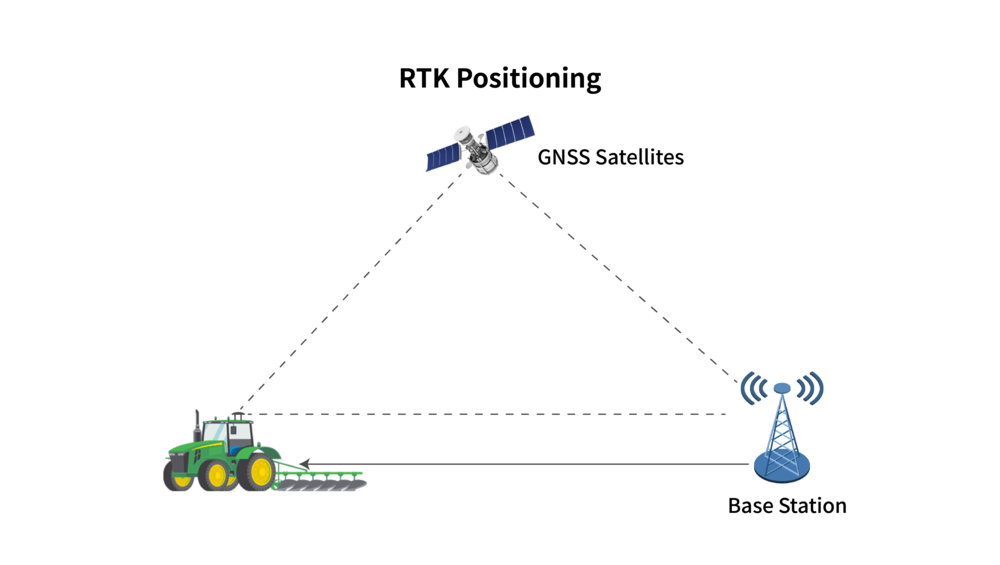
GNSS/INS navigation: The “eyes” of centimeter-level positioning
As the “eyes” of the GNSS auto-steering system, the core mission of GNSS/INS integration is to reliably capture satellite signals in real time with centimeter-level accuracy, even in complex and dynamic field environments.
Farmland is far from an ideal open-sky environment. Overhead power lines, shelterbelts, undulating terrain, and tall crops such as corn or sugarcane can all block or distort satellite signals, causing signal blockage or multipath interference, resulting in lost accuracy or temporary signal lock failures. The number of visible satellites can change dynamically, particularly in mountainous areas, pushing antenna performance and baseband algorithms to their limits.
Achieving high-precision RTK positioning requires antennas with outstanding phase center stability, multipath mitigation, and anti-interference capability. Without this foundational layer of antenna performance, even the most sophisticated INS algorithms are essentially flying blind. This is because precision begins at the point of signal capture. Through its Verditex brand, Quectel brings decades of hands-on expertise in GNSS high-precision positioning. Careful attention to RF front-end design ensures robust acquisition and tracking sensitivity, while proprietary GNSS/INS fusion algorithms help maintain stable navigation performance even in weak-signal environments such as mountainous areas, complex terrain, or shaded orchards.
PnC algorithms: The “brain” behind complex field decisions
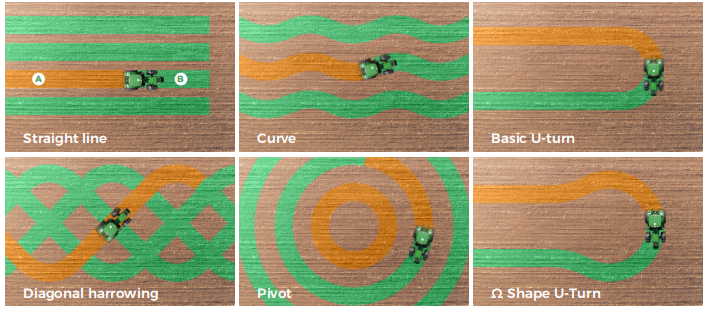
PnC Algorithms act as the “brain” of the GNSS auto-steering system. Their primary job is to correct real-time deviations during operation and ensure accurate tracking of the planned path, even in complex and dynamic fields.
Fieldwork is about far more than just driving in straight lines. From curves and diagonal harrowing to pivot and automatic headland turns, the path planning algorithm must account for diverse scenarios. It synthesizes field boundaries, agronomic rules like row spacing, and real-time positioning data to chart the most efficient route, while continuously solving for control commands through vehicle dynamics models, ensuring smoother and more accurate auto-steering.
In challenging environments such as sloped terrain, sandy soil, or paddy fields, wheel slip and spin-out can occur, leading to inaccurate front wheel angle and heading estimation.
Quectel’s intelligent control algorithms are built on extensive field data collected across diverse vehicle models under complex conditions, ensuring precise navigation and control under even the most challenging field conditions.
Steering motor: The “body” of high-torque precision control
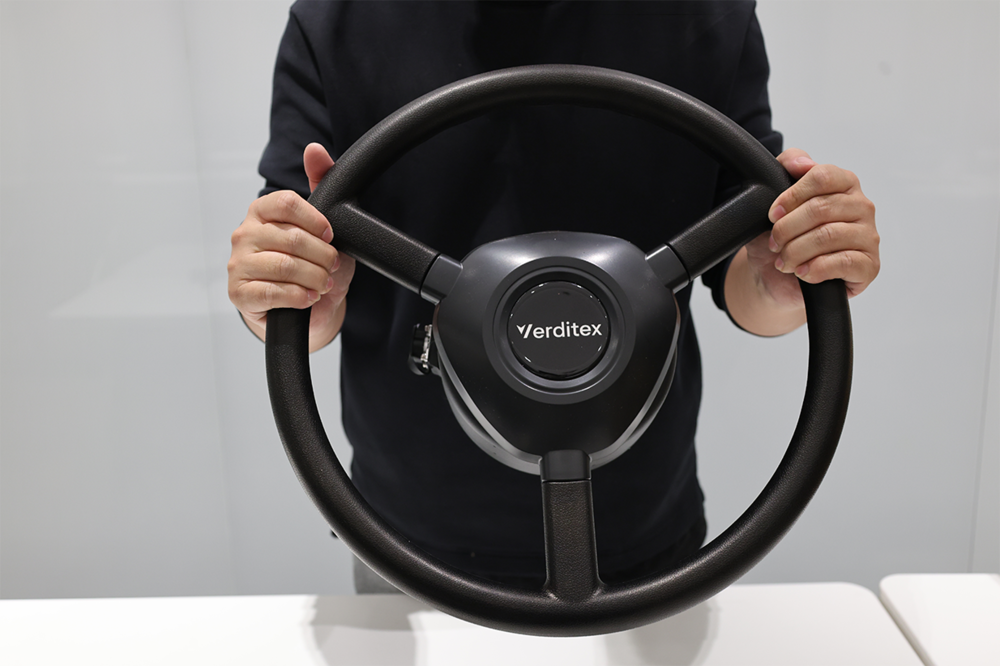
The steering motor is the “body” of the GNSS auto-steering system. It executes the control commands issued by the “brain”. Its response speed and precision control determine the final accuracy of the navigation system.
The development of aftermarket agricultural navigation systems has progressed from hydraulic to electric motor control. Hydraulic control, which requires complex modifications to a vehicle’s steering hydraulics, is often difficult to install and highly dependent on the compatibility of the system. The electric motor-based solution effectively addresses this limitation, dramatically improving installation and commissioning efficiency while delivering stable, repeatable performance.
Quectel prioritizes reliability and durability alongside performance in its GNSS auto-steering motor. It delivers sufficient torque and rapid response for demanding field conditions, while its IP66-rated enclosure provides protection against water and dust, all qualities essential for equipment that operates season after season in unpredictable environments.
Display and control terminal: The "face" of human-machine interaction
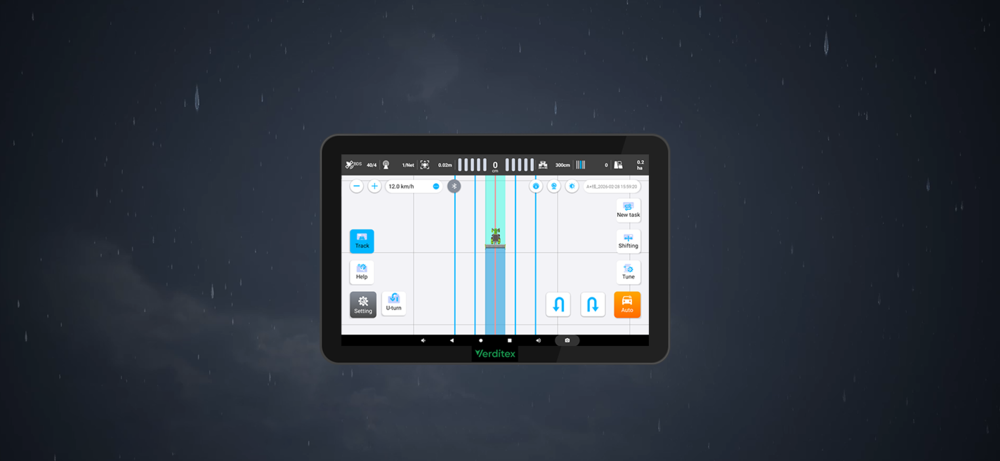
Serving as the "face" of the agricultural navigation system, the display terminal is where farmers connect with technology. The user experience determines whether a product truly works and whether farmers choose it.
This "face" is built for two main challenges: environmental adaptability and interaction intuitiveness. First, the display must maintain high brightness and contrast for sunlight readability, while effectively minimizing glare during nighttime operations. It also features glove-compatible touch recognition with effective palm rejection, because farmers always wear gloves in actual work.
Verditex’s Quectel-powered GNSS autosteer system is available in 10.1-inch and 12-inch industrial-grade models, these tablets deliver sunlight readability, anti-glare for night work, and glove-compatible touch.
For the diverse community of equipment operators, complex parameter configuration can be a headache. Exceptional design must translate complex user requirements into streamlined workflows. Quectel's AgriNav app addresses this with one-touch operation, voice guidance, and graphical prompts to deliver a truly minimalist operating experience.
What comes next? Quectel's display terminals and AgriNav software continue to evolve, integrating AI-driven agronomic algorithms to empower smarter, more intelligent farming operations.

Looking ahead: From component breakthroughs to system integration
The future of agricultural navigation technology lies not only in sharper "eye" (navigation), smarter "brain" (algorithm), steadier "body" (steer motor), and friendlier "faces" (display terminal), but in whether these four systems can achieve deep synergy and unified optimization.
At Verditex, we believe true next-generation intelligence comes from system-level integration of all components. That's why we're engineering seamless synchronization from perception to decision, actuation and interaction, through shared data architecture and unified tuning. This integrated path is how we break through today's limits to deliver navigation systems that are not just more precise, but genuinely intelligent, rugged, reliable, and intuitively easy to use.
By embedding 5G, edge computing, and AI into our core architecture, we're transforming our solutions from simple assisted-steering tools into truly intelligent farming machines that can perceive, decide, and act with minimal human input.
Going forward, Verditex remains at the forefront of this agricultural transformation. From automation to true intelligence, we're committed to making agriculture smarter!


