2026 Harvest Season: Global Grain Market Trends and the Role of Precision Agriculture
The Global Harvest at a Crossroads
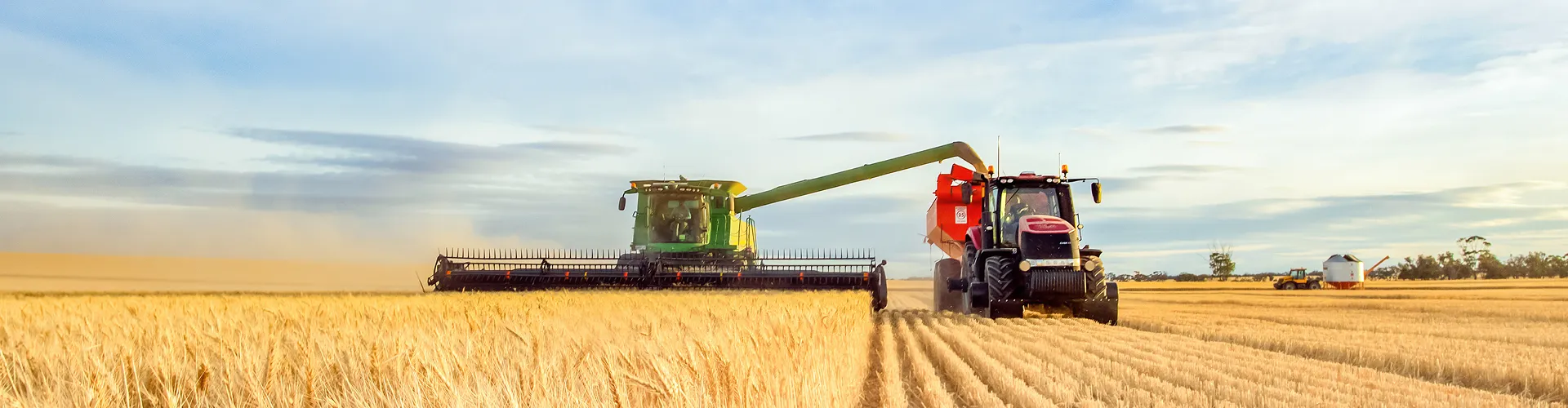
As the 2026 harvest season unfolds across the world's major grain-producing regions, farmers and agribusinesses are navigating an increasingly complex landscape. Shifting supply-demand dynamics, climate volatility, and mounting economic pressures are reshaping how the global grain industry operates-and accelerating the adoption of technologies that promise greater efficiency and resilience.
From the wheat fields of Central Asia to the corn belts of North America and the soybean expanses of South America, the 2026 harvest is unfolding against a backdrop of both challenge and opportunity.
Global Grain Markets: Supply, Demand, and the Productivity Imperative
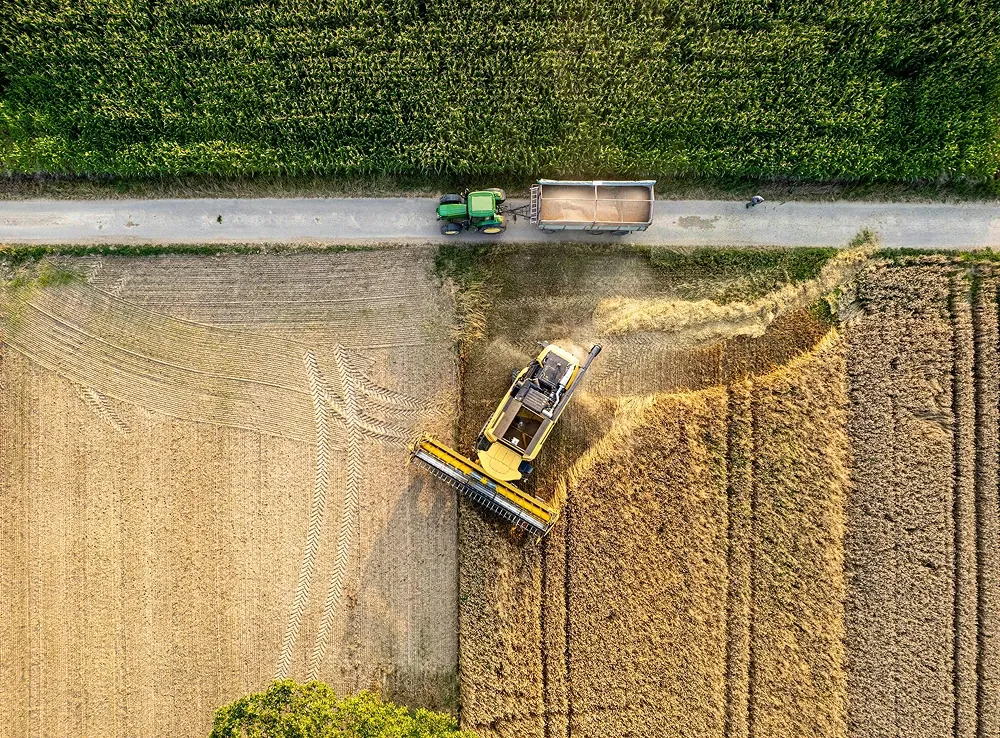
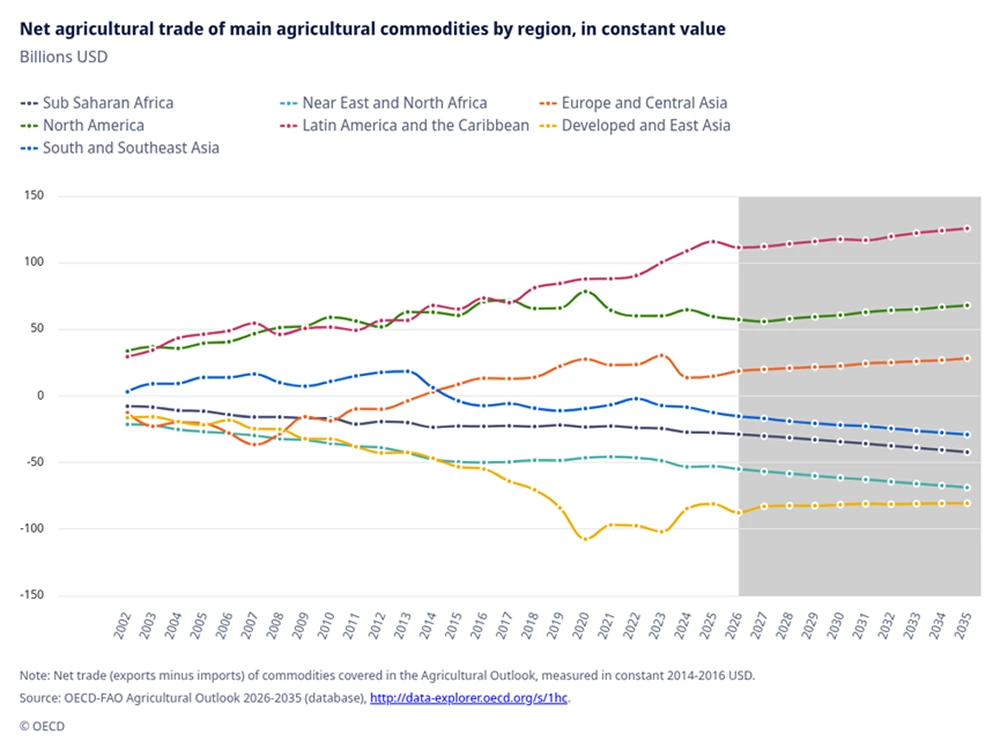
Global cereal consumption is on an upward trajectory. According to the OECD-FAO Agricultural Outlook 2026-2035, demand for wheat, corn, rice, and other major cereals is expected to continue expanding over the next decade, driven by population growth, rising food consumption in emerging economies, and increased demand for animal feed.
Yet meeting this growing demand is becoming increasingly difficult. Climate variability is intensifying, with droughts, floods, and unseasonable weather events disrupting production cycles across multiple continents. Input costs-fertilizer, fuel, labor-remain elevated compared to pre-pandemic levels, squeezing margins for producers worldwide.
The result is a global agricultural sector under urgent pressure to produce more with less. Across all regions, one operational trend stands out: farms that have invested in precision agriculture are consistently outperforming those that haven't, especially in harsh conditions.
Net Agricultural Trade Chart
🌾 Technology Is Transforming Modern Farming
Precision agriculture is no longer a niche concept reserved for early adopters-it is becoming a core operational necessity for farms of all sizes. In a market where commodity prices fluctuate and input costs remain high, the margin for error has never been thinner.
Three key operational drivers are accelerating this shift:
1. Input Optimization at Scale
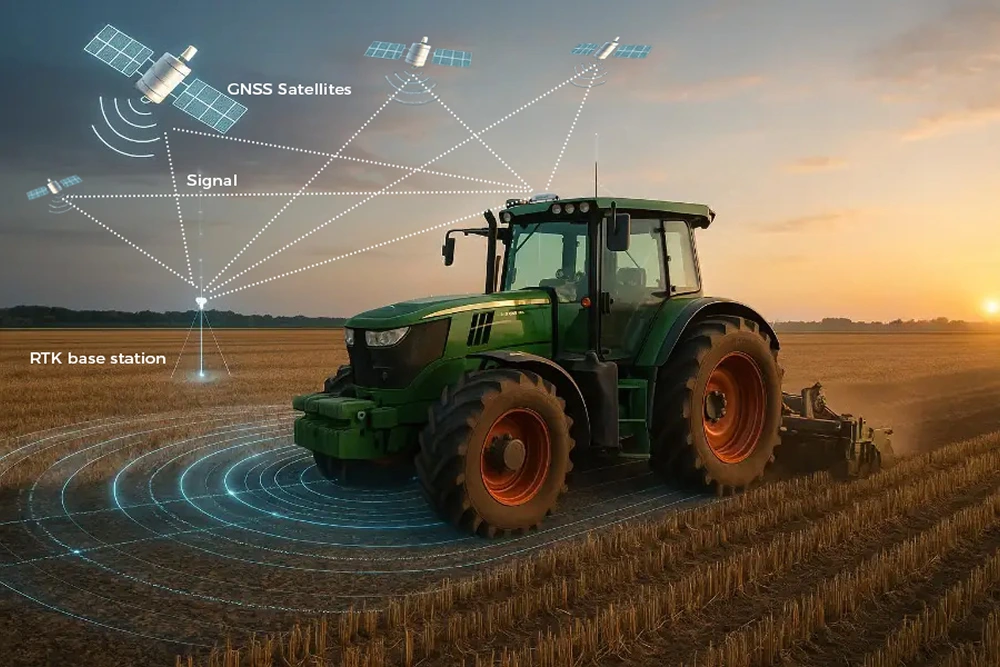
Fertilizer prices remain 40-50% above pre-pandemic levels (Source: World Bank Commodity Markets Outlook, 2026). Variable-rate application technology—enabled by High-Precision RTK positioning and automated section control—allows growers to apply inputs strictly where needed, drastically cutting waste.
2. Labor Efficiency in a Tight Market
Agricultural labor shortages persist globally, particularly for skilled machinery operators. According to the International Labour Organization (ILO), structural labor deficits continue to widen due to rapid urbanization and aging rural populations. Auto-steering systems relieve driver fatigue, extend working hours during critical planting and harvesting windows, and allow less experienced operators to achieve high-precision output. Farms utilizing GPS-based guidance systems report a 20–30% increase in daily field capacity.
3. Data-Driven Decision Making
The integration of GNSS positioning with farm management software creates a continuous operational feedback loop. From yield mapping and soil sampling to real-time equipment telemetry, data has become the ultimate tool for yield stability, input optimization, and precise field timing.
🚜 Verditex: Bridging the Gap Between Technology and Adoption
While the benefits of precision agriculture are evident, accessibility remains a significant challenge for many growers. Systems requiring overly complex infrastructure, steep learning curves, or prohibitive upfront investments often deter farms operating on tight margins.
This is where Verditex bridges the gap.
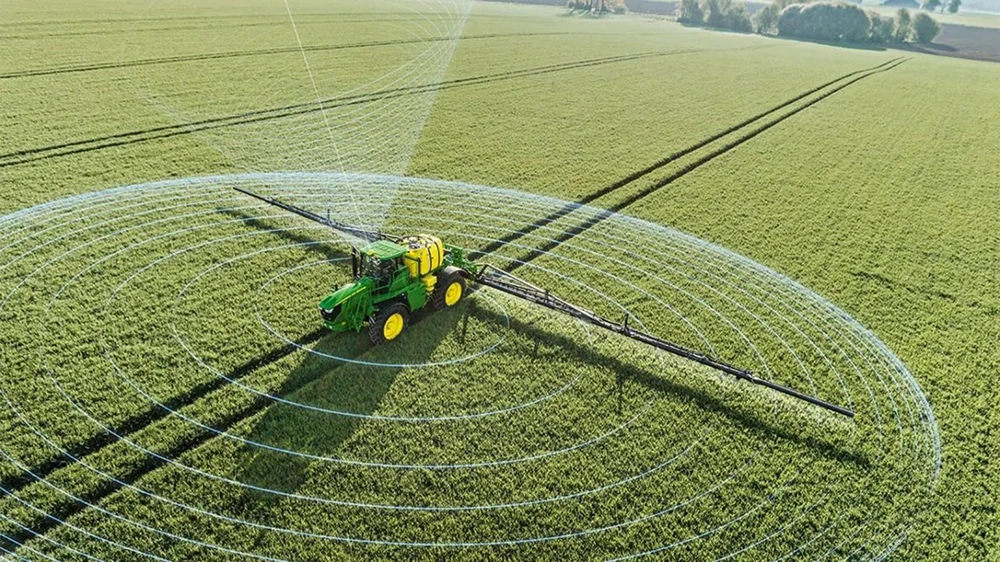
By focusing on intuitive, robust, and cost-effective precision technologies, Verditex makes advanced guidance accessible to everyday farming operations. Solutions like the Verditex FMA Auto Steering Systems are built for real-world field conditions, offering seamless adaptability for key operations including tillage, sowing, spraying, and harvesting.
Key Value Drivers for the 2026 Season:
- Centimeter-Level Accuracy: Eliminates overlaps and skips, directly cutting seed, chemical, and fuel waste.
- Operational Efficiency: Increases daily coverage and maximizes field capacity across diverse terrains.
- Operator Relief: Reduces fatigue during demanding planting and harvest windows, enhancing safety and throughput.
- Proven ROI: Delivers measurable economic efficiency and higher overall productivity without unnecessary operational complexity.
For farmers facing increasing operational challenges, precision agriculture is not just an upgrade - it is becoming an essential tool for sustainable and profitable farming.
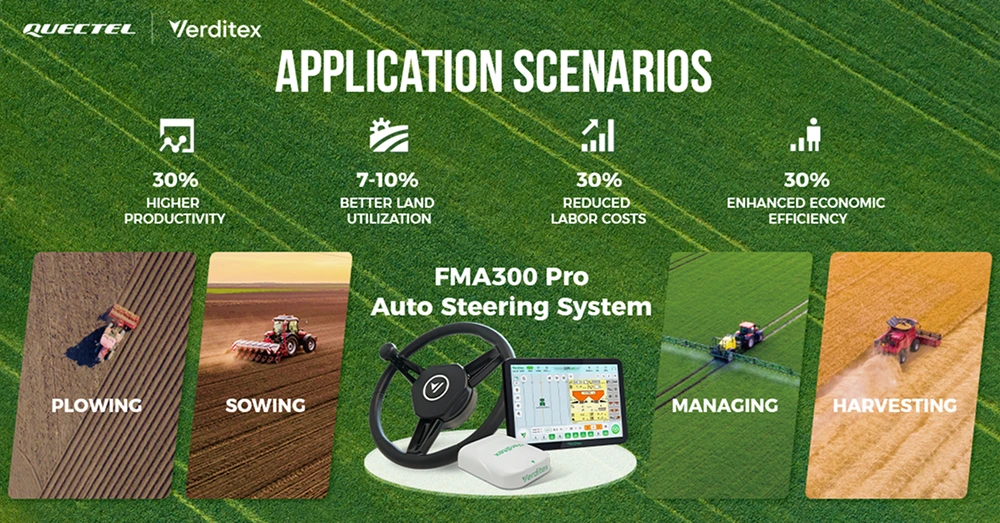
Application Scenarios / FMA300 Pro Auto Steering System
🌍 Building the Future of Farming Together
As the 2026 harvest progresses, one lesson is clear: the farms that will thrive tomorrow are those that view precision agriculture not as a capital expense, but as a core operational capability.
In a global market continually shaped by climate variability, market fluctuations, and rising demands for sustainability, the ability to optimize every input and minimize every waste stream is no longer just a competitive edge.
It is the key to long-term resilience.
The future of agriculture depends not only on what we grow, but on how intelligently we cultivate it.
About Verditex
Verditex, part of Quectel Wireless Solutions, is dedicated to advancing smart agriculture. Led by industry experts, the brand provides innovative solutions in IoT, automation, and high-precision positioning to improve productivity and operational accuracy for the global farming sector.
Media Contact:
- Email: marketing@verditex.com
- Website: www.verditex.com


